Buying a used car engine can be a reliable and cost-effective solution—but only if the engine has been properly checked. Unfortunately, many buyers rely on visual appearance or seller claims, which often leads to expensive mistakes.
In this article, we explain how to properly check the condition of a used engine before buying, what to look for, and why professional inspection is essential.
Why Checking a Used Engine Is Critical
An engine is a complex mechanical system. Even a low-mileage engine can hide serious internal issues that are impossible to detect without proper tools and expertise.
A faulty engine can result in:
- Immediate failure after installation
- Excessive oil consumption
- Knocking or bearing failure
- Loss of compression
- Overheating and long-term damage
That's why checking a used engine is not optional—it's essential.
Step 1: Verify Engine Compatibility (Engine Code)
Before any mechanical check, the engine must be compatible with your vehicle.
Key points to verify:
- Exact engine code
- Vehicle make and model
- Production year and version
- Fuel type and emission standards
Installing the wrong engine—even if it looks similar—can cause serious technical and legal issues.
👉 At Auketra, engine compatibility is verified before any sale or shipment.
Step 2: Check Mileage and Engine History
Mileage alone does not define engine condition, but it provides important context.
What to check:
- Verified mileage from the donor vehicle
- Maintenance history (if available)
- Reason the vehicle was dismantled (accident, mechanical failure, etc.)
Unverified or inconsistent mileage is a major red flag.
Step 3: External Visual Inspection (Basic but Not Enough)
A visual inspection helps identify obvious problems, but it should never be the only check.
Look for:
- Oil leaks around seals and gaskets
- Cracks or damage on the engine block
- Signs of overheating (burn marks, discoloration)
- Broken mounts or connectors
A clean exterior does not guarantee a healthy engine—but visible damage is a warning sign.
Step 4: Compression Test – A Key Indicator of Engine Health
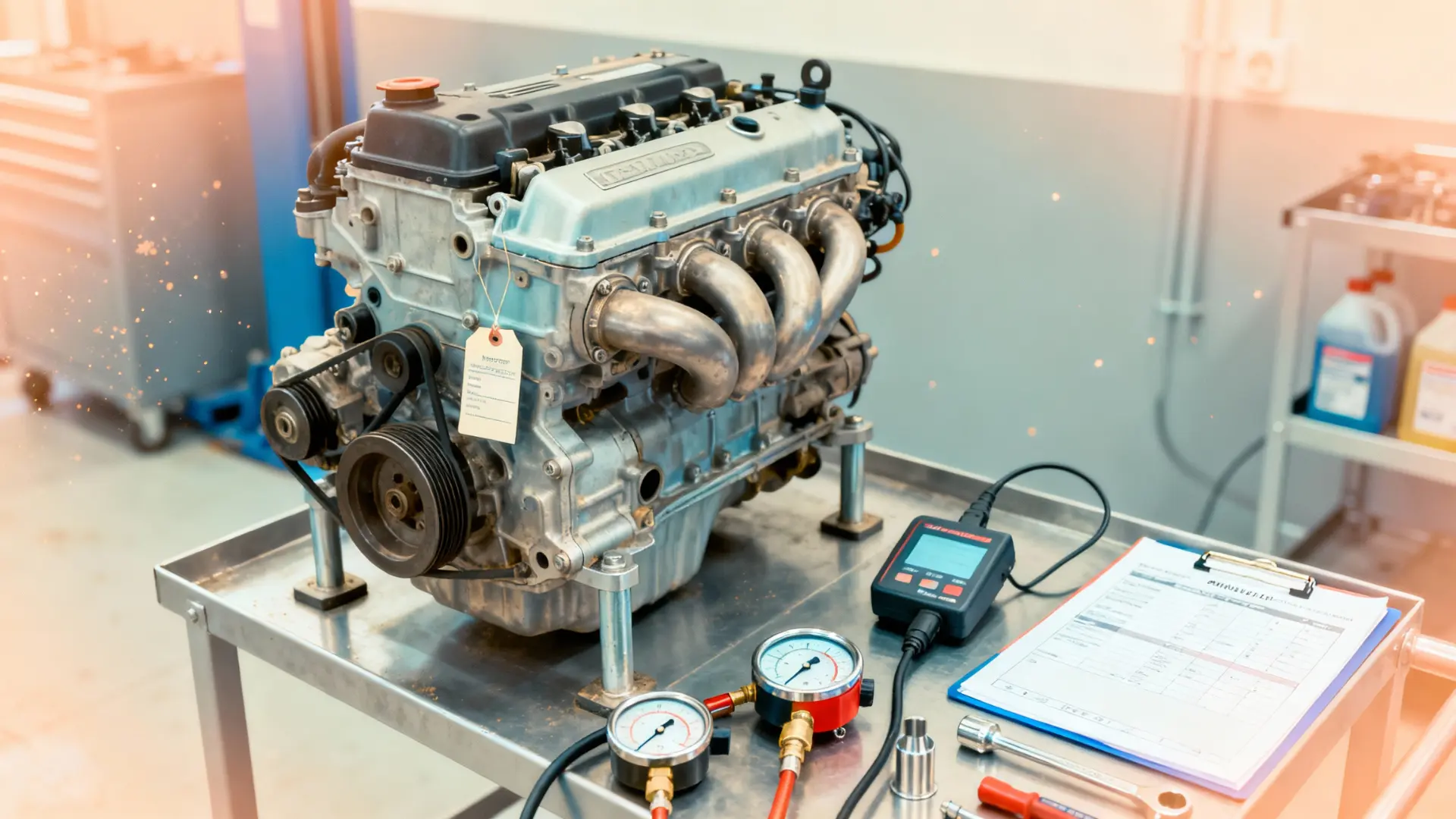
A compression test measures how well each cylinder seals.
Why it matters:
- Low compression may indicate worn piston rings or valves
- Uneven compression suggests internal imbalance
- Healthy compression means proper combustion
Engines without compression testing should be avoided.
Step 5: Leak-Down Test – Detecting Hidden Internal Problems
A leak-down test goes deeper than compression testing.
It helps detect:
- Valve leaks
- Piston ring wear
- Head gasket issues
This test provides a clear picture of the engine's internal sealing condition.
Step 6: Internal Inspection Using an Endoscope Camera
One of the most important professional checks is internal visual inspection.
Using an endoscope camera allows inspection of:
- Cylinder walls
- Pistons and combustion chambers
- Valve condition
- Signs of scoring or abnormal wear
This step reveals damage that cannot be seen externally.
Step 7: Oil Analysis and Bearing Inspection
Old engine oil tells a story.
Professionals analyze oil to check for:
- Metal particles
- Signs of bearing wear
- Contamination from coolant or fuel
Special attention is given to connecting rod bearings, which are a common failure point in used engines.
Step 8: Listen for What You Can't See
If the engine can be tested before removal or on a test bench, professionals also check for:
- Knocking noises
- Irregular rotation
- Mechanical resistance
- Abnormal vibration
These signs often indicate internal wear or imbalance.
Why Most Buyers Can't Perform These Checks Alone
Many of these inspections require:
- Specialized tools (compression testers, endoscope cameras, oil analysis equipment)
- Mechanical expertise
- Experience interpreting results
- Time and controlled conditions
This is why buying a used engine without professional inspection is risky.
How Auketra Helps You Avoid These Risks
At Auketra, checking used engines is our job.
Before an engine is sold, we:
- Verify compatibility and engine code
- Review mileage and history
- Perform mechanical tests (compression, leak-down)
- Inspect the engine internally (endoscope camera)
- Analyze oil and bearing condition
- Approve only engines eligible for warranty
Our goal is simple: to provide engines that are ready to be installed with confidence.
Conclusion: Don't Guess—Verify
A used engine should never be a gamble.
If you don't have the tools or expertise to fully inspect an engine, the safest solution is to buy from a specialist who already has.
With Auketra, you don't just buy a used engine—you buy expert verification, inspection, and peace of mind.
Ready to get a professionally inspected engine? Request a quote and get an engine that meets our quality standards.
FAQ
Need a Professionally Inspected Engine?
Get a used engine that has been thoroughly inspected and tested. We verify compatibility, perform all essential checks, and provide a 10-month warranty for your peace of mind.